Why a Whole House Surge Protector Makes Sense Here
Florida sees more lightning than almost any other state, and summer afternoons here prove it. Most damage doesn’t come from a direct hit. It comes from a strike down the street, or from the grid itself.
Those surges ride in on the power line and hit every circuit at once. Your AC control board, your fridge, the garage door opener, the TV. A whole house surge protector stops the spike at the panel, before it gets that far.
How It Works
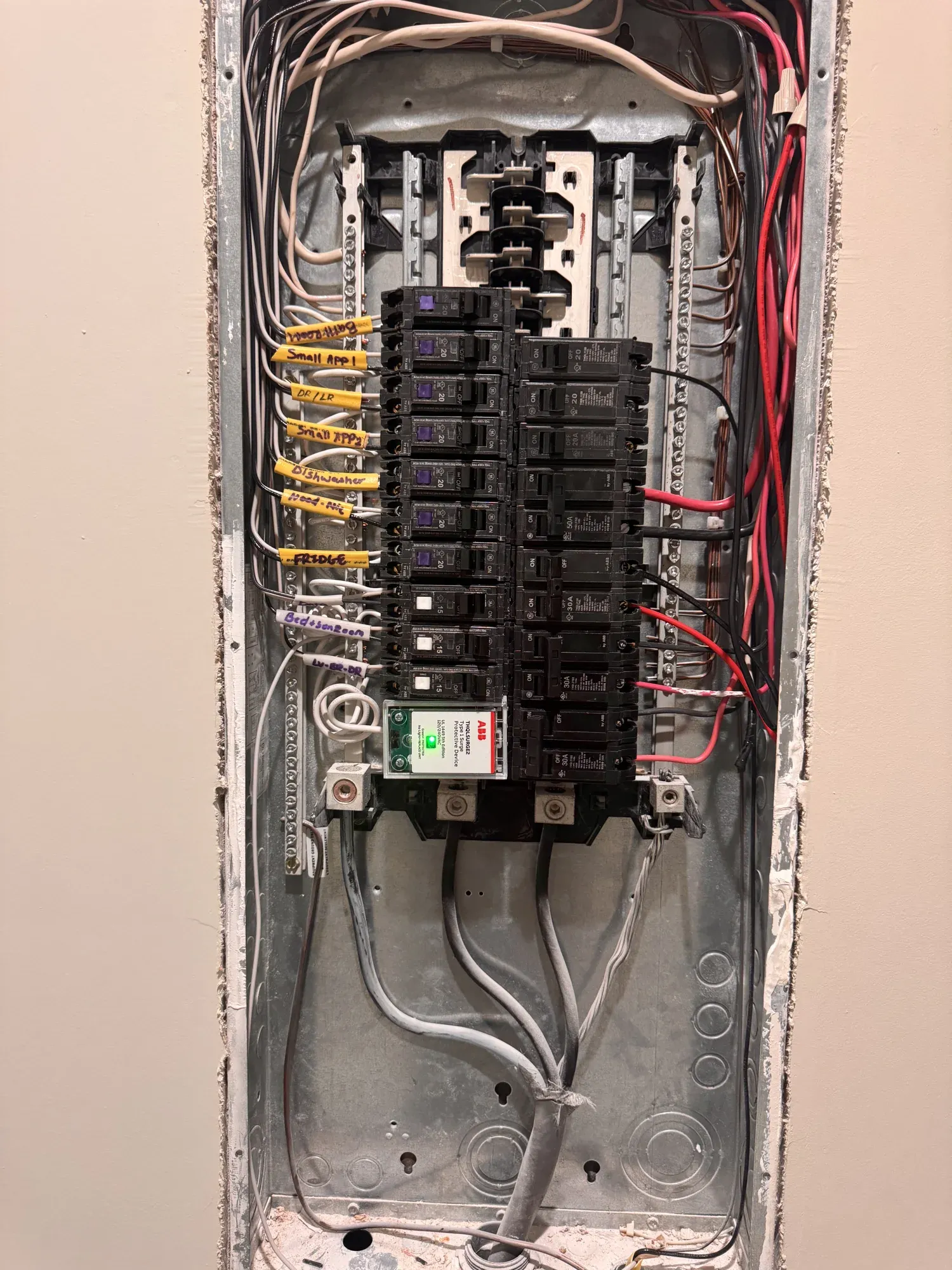
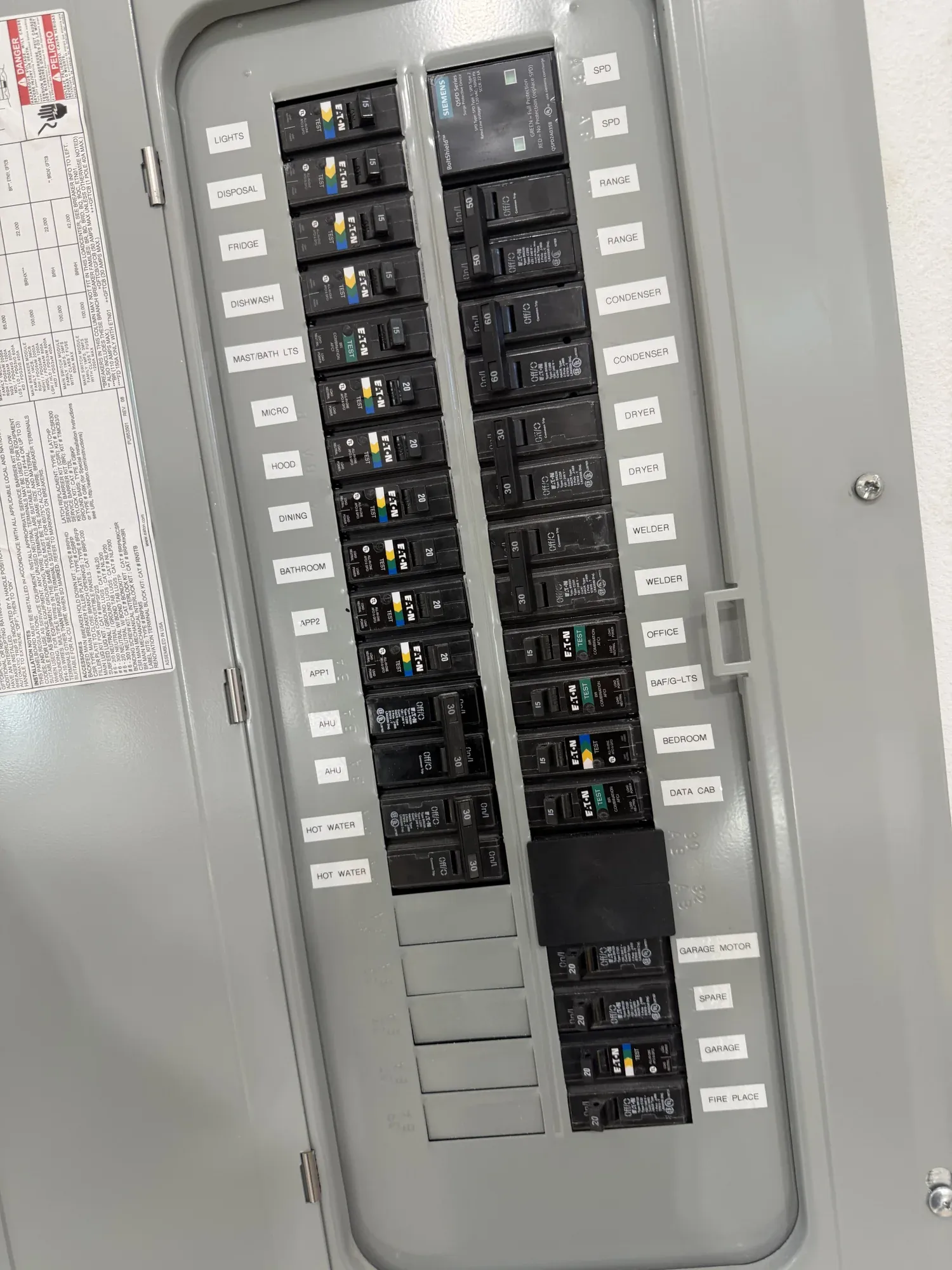
The device mounts at or beside your main electrical panel and connects to a breaker. When voltage jumps above a safe level, it sends the excess to ground in a fraction of a second. Then it goes back to waiting.
Most units have an indicator light, so you can see at a glance that the protection is still active. After a big storm, it’s worth a look.
What We Check Before We Install
Every house is different, so we start at the panel. We check:
- whether there’s a breaker space for the device, or if we need to make one
- the grounding and bonding, because surge protection only works with a good ground
- the age and condition of the panel itself
If the panel is old or already full, we’ll tell you. Sometimes the right move is a panel upgrade with surge protection included.
Pair It With a Standby Generator
When the grid comes back after an outage, the switch-over can send a spike through the house. If you have a Generac standby generator, or you’re planning one, surge protection belongs in the same project. One visit, one permit where it’s needed.
Part of a Safer Electrical System
A whole house surge protector is one of the simplest upgrades you can make. It won’t change how your home works day to day. It just protects what you’ve already paid for.
We install them across St. Augustine, Ponte Vedra Beach, Nocatee and Palm Valley. See our residential electrical services for the rest of what we do in your home.